




Key Takeaways
- Always dry-clean pure silk sarees for safety; you can hand-wash lightly worked ones at your own risk.
- Use a pH-neutral shampoo and cold water if you decide to hand-wash at home.
- Store sarees in muslin or cotton, never plastic, and change folds every few months.
- Avoid direct heat and wringing when drying silk to prevent damage.
- For special fabrics like Ajrakh, wash separately and use vinegar in the rinse to set the dye.
If you’re short on time, here’s the fast version. Our general recommendation: dry-clean pure silk sarees, always — it’s the safer choice and the one we’d make ourselves. If you choose to hand-wash a plain, lightly worked pure silk piece at home anyway, that’s a judgment call made at your own risk: cold water, a pH-neutral shampoo, never a detergent bar, never wring — roll it in a dry towel to press out water, dry flat in shade, iron on the reverse side on a silk or low setting. Store folded in muslin or cotton cloth, never plastic, and change the folds every few months. Any zari-heavy piece — Banarasi, Kanjivaram, heavily worked borders — should always go to a professional dry cleaner, once a year minimum, even if it looks fine; zari tarnishes from the inside out before it ever shows on the surface.
Why Saree Care Isn’t One Method — It Depends on the Weave
In Madanpura, the women who’ve raised generations of weavers don’t wash a katan silk Banarasi the way they’d wash a cotton Mangalagiri, and they’d never touch an Ajrakh the way they’d touch a Kanjivaram. Every fabric here carries a different fibre, a different dye process and, often, real metal in the border. Treat them the same way and you’ll shorten the life of exactly the piece you meant to protect. This guide splits care by what the saree is actually made of — not by price or occasion — because that’s the only distinction that matters once the saree is home and needs washing, storing or fixing after a stain.
Our general recommendation is dry-clean, always — it’s the lowest-risk choice for a saree you’ve paid silk prices for, and the one we’d suggest by default. That said, it’s worth knowing that plain or very lightly worked pure silk — a simple katan, a tussar, a Kanjivaram without a dense zari border — can be hand-washed at home, and some weaving families in Madanpura do exactly that with their own everyday sarees. This is a judgment call made at your own risk, not something we’re recommending. Heavy zari, embroidery, appliqué or starch-stiffened borders should never be hand-washed under any circumstances — water risks tarnishing the metal thread and pulling a structured drape out of shape permanently. If you’re at all unsure what your saree’s border is made of, take it to a professional instead of guessing.
How to Wash a Pure Silk Saree at Home
⚠️ Dry-clean is our default recommendation for all pure silk.
The steps below are for readers who choose to hand-wash a plain, lightly worked pure silk saree at home anyway — this is a judgment call made at your own risk, not something we’re recommending as the safer option. Any saree with heavy zari, embroidery, or a stiffened border should never be hand-washed; take it to a professional cleaner instead.
Our default advice is dry-clean, every time. The steps below are for readers who choose to hand-wash a plain, lightly worked pure silk saree anyway, entirely at their own risk. Heavily worked zari borders should never be hand-washed — send those straight to a professional; more on that below.
What You’ll Need
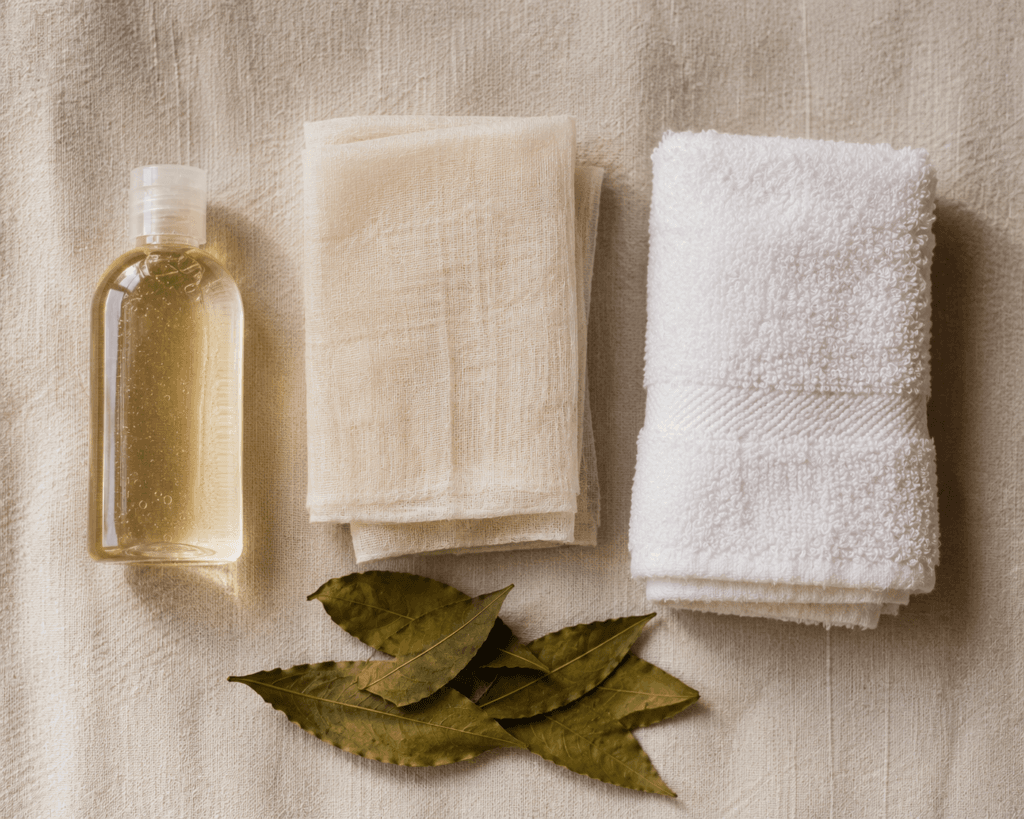
- A pH-neutral shampoo or a silk-safe liquid wash — never a bar detergent or washing powder
- Cold or room-temperature water only
- A large, flat, shaded surface or a clean dry cotton towel
- A cotton cloth for ironing
Step by Step
- Test colorfastness first. Dab a hidden inside corner with a wet white cloth — if color transfers heavily, the saree needs professional cleaning, not a home wash.
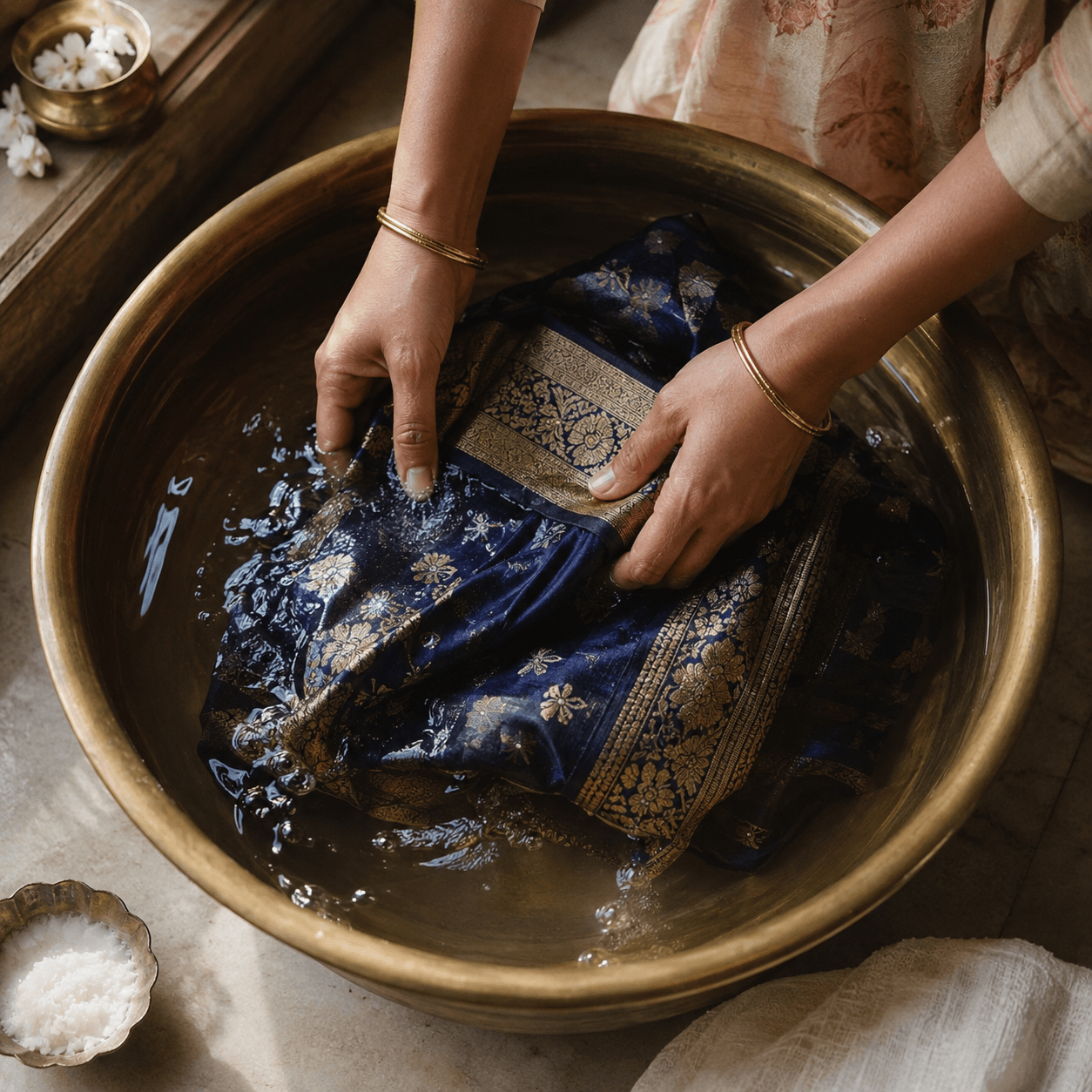
- Fill a tub with cold water and a small amount of pH-neutral shampoo. Swirl to mix — don’t pour shampoo directly onto the fabric.
- Submerge the saree and gently press it through the water for 2–3 minutes. Do not scrub, twist or rub the zari border.
- Rinse in cold water until it runs clear, changing the water two or three times.
- Never wring. Lay the saree flat on a dry towel, roll the towel up, and press gently to draw out excess water.
- Dry flat or over a wide, padded rod, fully in shade. Direct sun fades silk and weakens the fibre over time.
- Iron while slightly damp, on the reverse side, on a silk or low heat setting, with a thin cotton cloth between the iron and the fabric.
What Never to Do With Silk
- Never machine wash, even on a delicate cycle
- Never use hot water — it sets stains permanently and can shrink the weave
- Never wring or twist to dry
- Never iron directly on zari — the metal thread scorches and blackens
Washing Handloom Cotton Sarees — Chanderi, Maheshwari, Mangalagiri
Handloom cotton is more forgiving than silk but not indestructible. For the first two or three washes, wash it separately — handloom cotton, especially naturally dyed pieces, sheds excess dye early on and can stain lighter fabrics in the same load. After that, hand wash in cold water with a mild detergent, or use a gentle machine cycle inside a mesh laundry bag. Air dry in shade; cotton handloom tolerates more sun exposure than silk, but repeated direct heat still fades color faster than you’d expect. If you like the crisp, structured drape that Chanderi and Maheshwari are known for, a light starch — or traditional rice water, which weavers’ families have used for generations — restores that stiffness after washing.
Caring for Zari and Metallic Thread
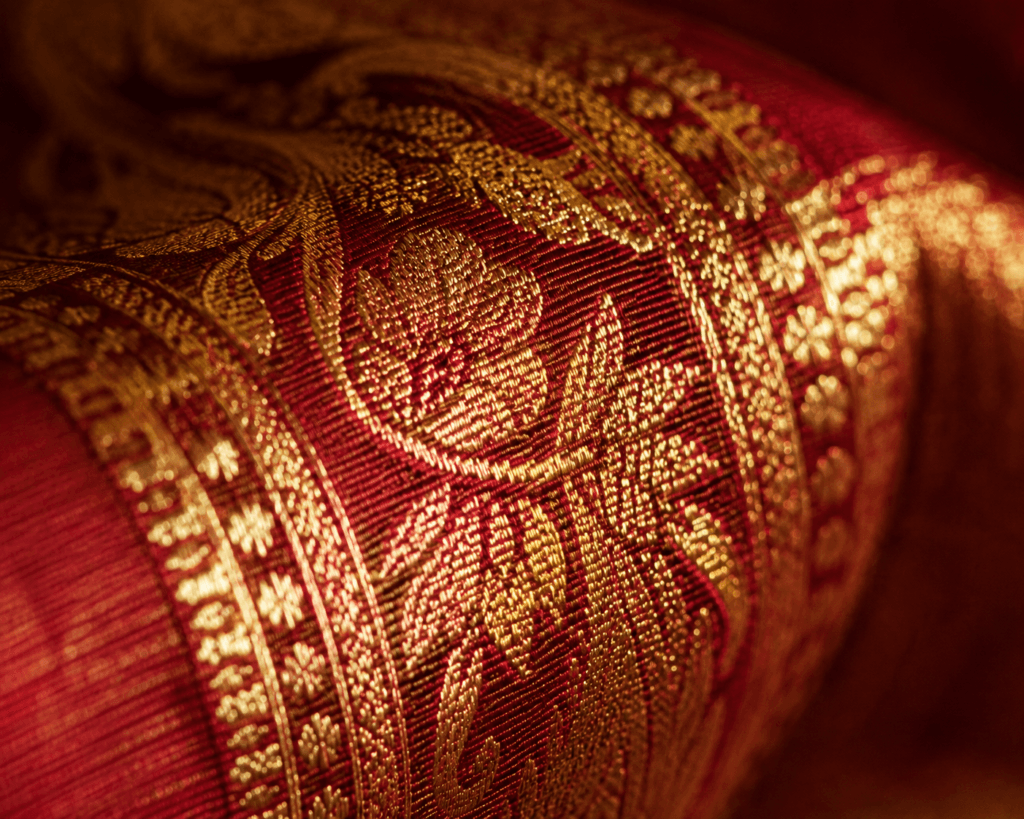
Real zari is silver or gold-wrapped thread, and it behaves like metal, not like fabric. It tarnishes with humidity, skin oils and perfume — this is normal ageing, not a manufacturing fault, and it’s actually one of the signs you’re looking at genuine zari rather than the tested-and-tarnish-proof synthetic “zari” used on cheaper powerloom pieces (see our guide on identifying pure silk for the fuller test). Never wash a heavy zari border at home. Wipe it gently with a dry, soft cloth after each wear, before you fold the saree away. Keep zari away from direct perfume or deodorant spray — the alcohol content dulls and pits the metal over time — and send zari-heavy sarees for professional dry cleaning at least once a year, even if you haven’t worn them, because the tarnish builds up from trapped humidity whether the saree is worn or shelved.
Ajrakh, Bandhani and Natural-Dye Sarees — Special Care
Natural-dye textiles like Ajrakh are chemically alive in a way synthetic-dye fabric isn’t — the indigo, madder and pomegranate-rind dyes used in the traditional 22-step Ajrakh process continue to bleed for several washes after purchase. Always wash separately for at least the first five wears. Use cold water, a mild soap, and keep the total time in water under two minutes — don’t soak. A dash of white vinegar in the final rinse helps set the natural dye and reduces bleeding in future washes. Dry inside-out, fully in shade, since direct sun fades hand block-printed color faster than it fades machine-printed synthetic dye.
How to Store a Saree So It Lasts Decades
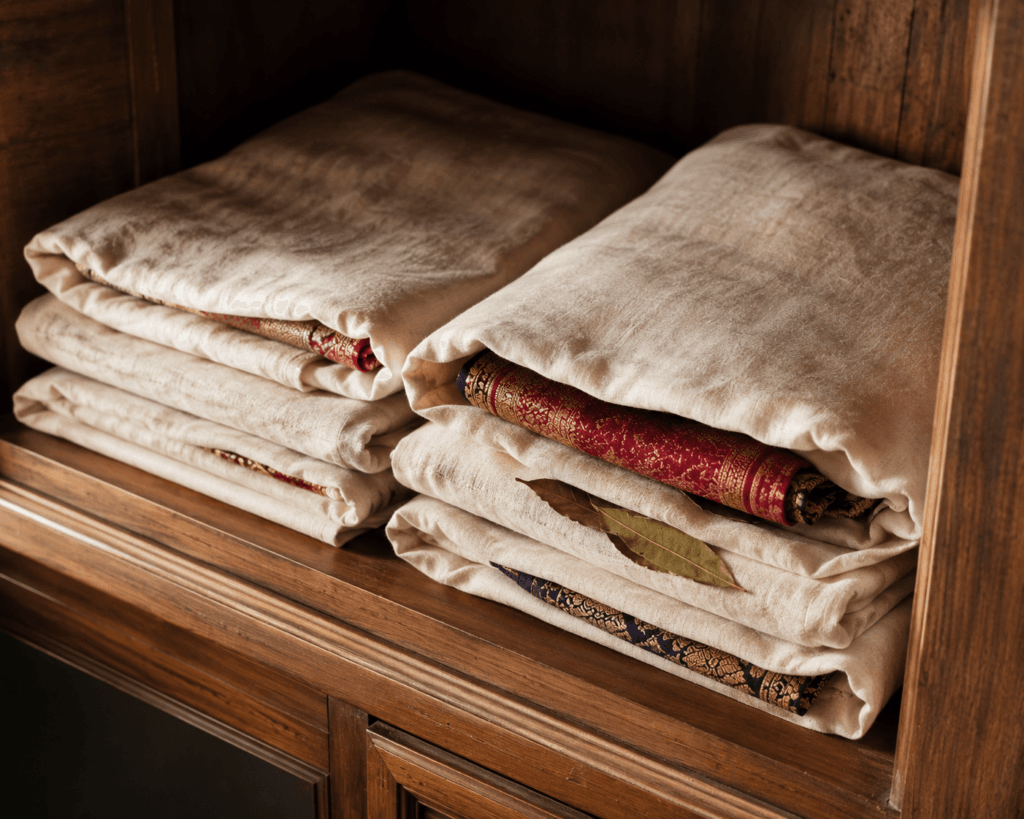
- Wrap each saree in a clean muslin or cotton cloth — never in plastic, which traps moisture and encourages mildew
- Use neem or dried tulsi leaves as a natural moth deterrent instead of naphthalene balls, which react chemically with silk and real zari over years of contact
- Refold every three to four months along slightly different lines, so a permanent crease-break doesn’t form along a zari border or a heavy embroidered edge
- Store heavy-pallu sarees flat, not on a hanger — hanging distorts embroidery and zari weight over months
- In humid or coastal cities, keep a small silica gel packet on the almirah shelf
- Keep silk and zari pieces away from direct light and away from unsealed raw wood, which can leach resin stains into fabric over time
When to Hand Wash vs. When to Dry Clean
Emergency Stain Fixes
- Oil or ghee: blot immediately, dust talcum powder over the mark, brush off after 20 minutes. Don’t rub — rubbing pushes oil deeper into the weave.
- Turmeric or haldi: rinse under cold running water immediately, from the back of the fabric. Hot water sets turmeric permanently within minutes.
- Sweat marks: sponge with cold water mixed with a few drops of white vinegar. Avoid spraying deodorant directly onto silk before wearing.
- Mehendi or henna: scrape off the excess gently, cold rinse only, and take it to a professional cleaner immediately if the stain is anywhere near zari.
The Nakshapatta Saree Care Checklist — Free Download
We’ve put the fabric-by-fabric wash rules, the full storage checklist and the stain-fix table from this guide onto one printable page you can keep inside your almirah. It’s free — no strings, just the checklist.
Related Reads:
Frequently Asked Questions
Can I wash a Banarasi silk saree at home?
Our default recommendation is to dry-clean all pure silk, including Banarasi. If you choose to hand-wash anyway, only do so if the zari work is very light and the base fabric is plain katan silk, and understand that’s at your own risk. Heavily worked Banarasi pieces with dense zari borders and butis should always go to a professional dry cleaner — home washing risks tarnishing the metal thread and pulling the weave out of shape. Check our Banarasi saree guide to identify how much zari your piece actually carries before deciding.
How often should I dry clean a silk saree?
Once a year for zari-heavy pieces, even if unworn — humidity causes tarnish whether or not the saree leaves the almirah. Lightly worked silk that you hand-wash at home doesn’t need dry cleaning unless it picks up a stain you can’t treat yourself.
Does ironing damage real zari?
Direct heat on zari scorches and blackens the metal thread. Always iron on the reverse side, on a low or silk setting, with a thin cotton cloth between the iron and the fabric, and avoid pressing directly over the border.
How do I stop my Ajrakh or Bandhani saree from bleeding color?
Wash it completely separately for the first five wears, use cold water and a mild soap, keep total time in water under two minutes, and add a dash of white vinegar to the rinse to help set the natural dye.
What’s the best way to store a saree in a humid city?
Wrap it in muslin cloth, never plastic, and keep a small silica gel packet on the shelf to absorb ambient moisture. Refold every three to four months so creases don’t become permanent breaks in the fabric or zari.
Want the next textile guide before it’s public? Join the Edit — one textile fact, one styling tip and one buying recommendation, straight from Varanasi.