

Key Takeaways
- A Jamdani saree is a handwoven textile from Bengal, recognized for its unique weaving technique using a discontinuous supplementary weft.
- Historically, Jamdani dates back to the Mughal era and has roots in the muslin trade of Bengal, with distinct centers in Dhaka and West Bengal.
- Jamdani saree prices depend on factors like thread count and motif density, ranging from ₹1,500 for simple designs to over ₹80,000 for intricate, labor-intensive pieces.
- To identify an authentic handwoven Jamdani saree, look for loose thread ends, micro-irregularities, and translucency in the fabric.
- Proper care involves hand washing with mild soap and drying flat, ensuring longevity and preserving the fine craftsmanship of Jamdani.
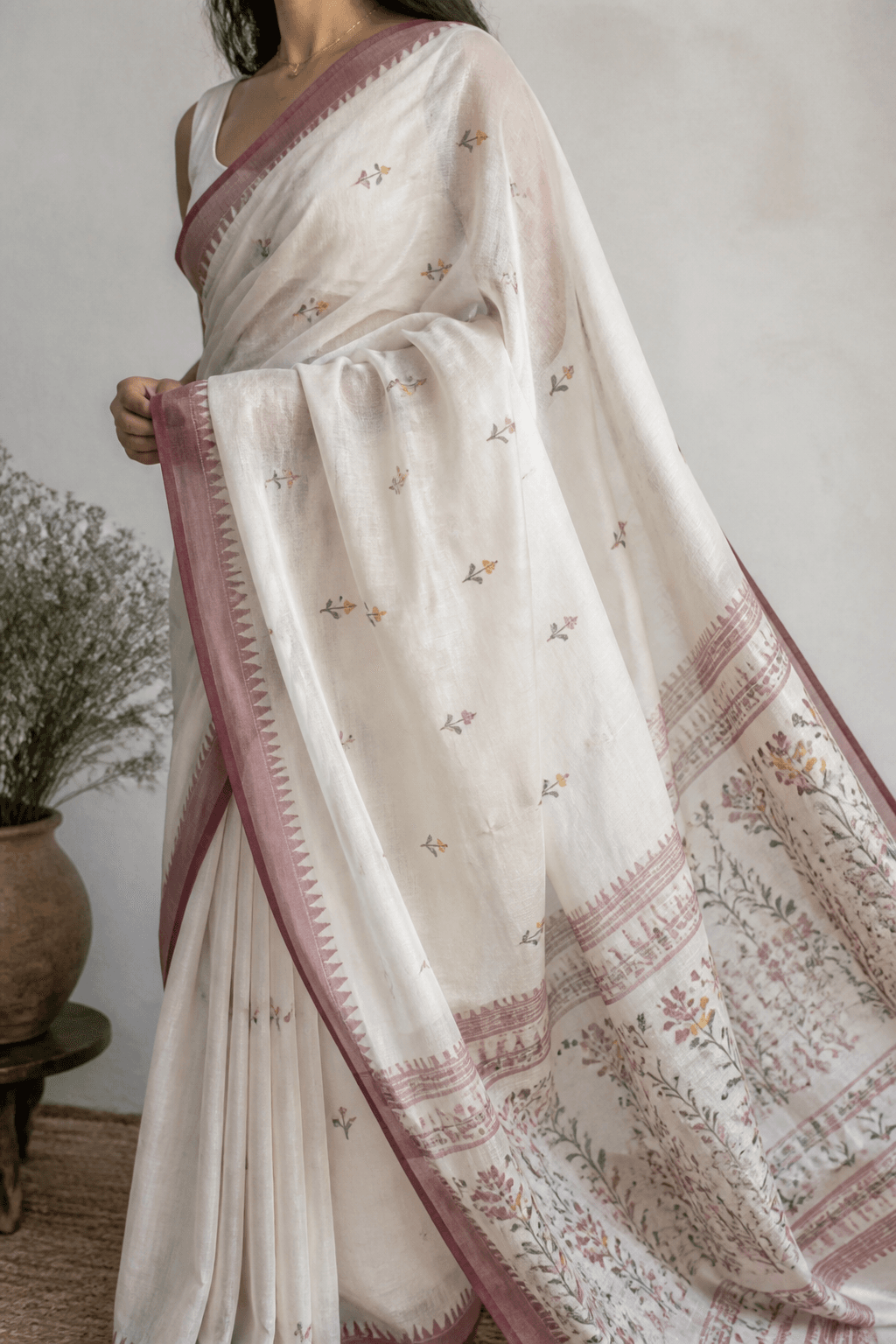
A Jamdani saree is a handwoven, translucent muslin or fine cotton saree from Bengal, made famous by a technique where the motifs are woven directly into the fabric by hand — not embroidered, not printed, and not added afterward. Each flower, paisley or geometric “buti” is built thread by thread using a discontinuous supplementary weft, which is why Jamdani has been called “woven air” since the Mughal court first prized it. It is one of only a handful of Indian weaves recognised by UNESCO as an Intangible Cultural Heritage of Humanity (2013), and it carries a GI tag on both sides of the Bengal border.
A note on count. You’ll often hear a Jamdani described by its count – the fineness of the cotton yarn, quoted as 84s, 100s, 120s and higher. A higher count means a finer, more translucent thread and many more hours at the loom, so a 100-count Jamdani is far finer, and costlier, than a 60-count one. Count is the single most useful number to ask a seller for, because it explains the price better than motif density does.
What Is a Jamdani Saree?
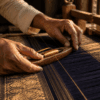
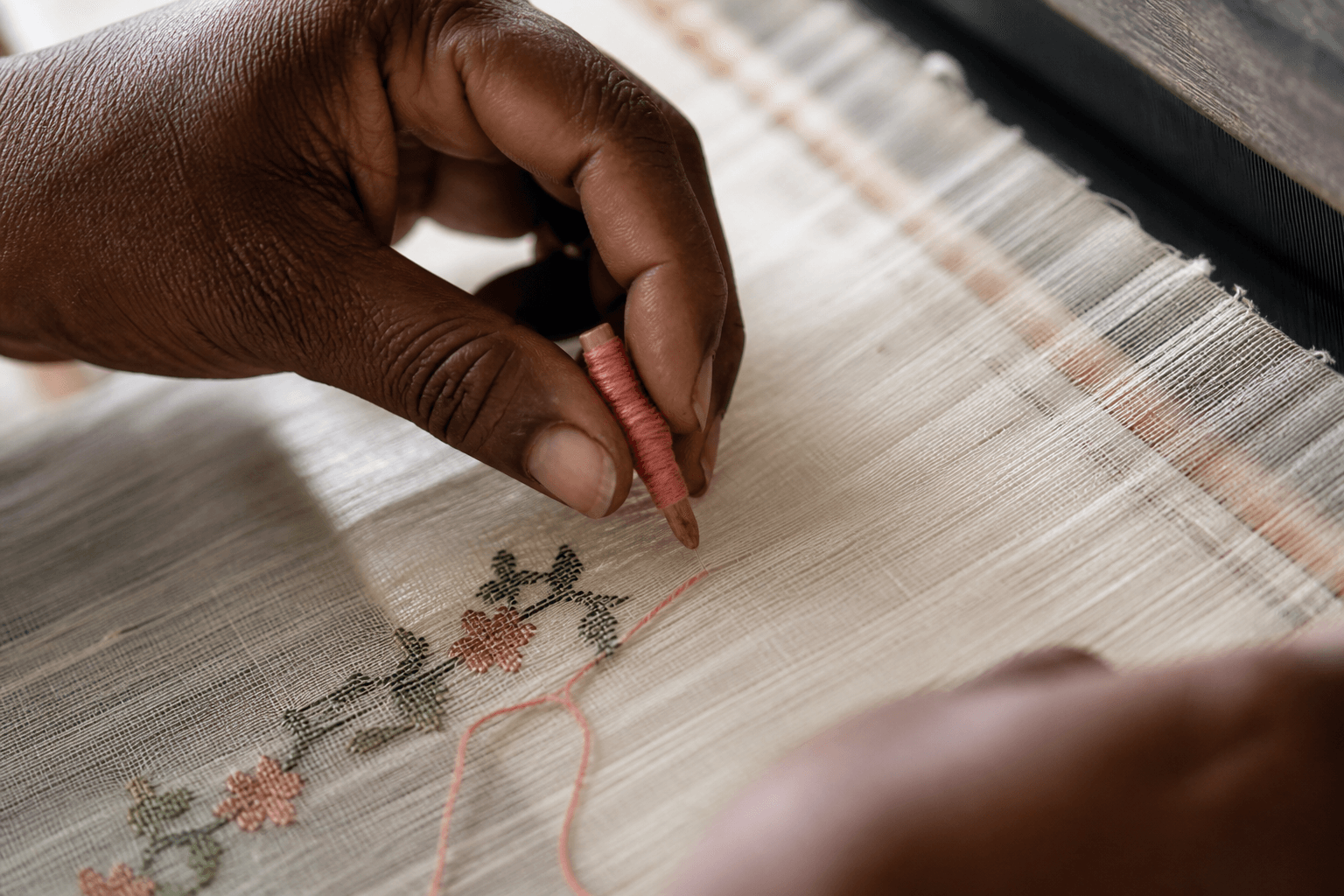
Jamdani is a plain-weave cotton or cotton-silk fabric — usually in a pale, near-transparent base — into which a second, discontinuous weft yarn is worked by hand to build up a motif, and then cut off rather than carried across the whole width of the fabric. That single technical detail is what separates Jamdani from almost every other Indian brocade weave, including the Banarasi work we cover often on this site. In a Banarasi saree the zari runs the full width on a jacquard-fitted loom; in a Jamdani, the weaver’s fingers place small bobbins of extra thread only where the motif needs them, then move on. It is slower, it is entirely manual, and it is why a single fine Jamdani can take a month or more on the loom.
The name itself comes from Persian: jam (flower) and dani (a vase or container) — a floral-vessel motif that shows up constantly in traditional Jamdani borders and pallus.
The History — From Mughal Muslin to a Divided Craft
Jamdani’s roots go back to the muslin trade of undivided Bengal, with some textile historians tracing the weave’s ancestry to references as early as the 3rd century BCE. It reached its documented peak under Mughal patronage in the 17th and 18th centuries, when Dhaka muslin — so fine it was said to pass through a ring — was woven for emperors and exported as far as Rome. Jamdani was the ornamented, patterned cousin of that plain muslin: the same impossibly fine cotton, but with hand-built motifs worked into it on the loom.
Colonial-era tariffs and the mechanised British textile industry gutted the muslin trade through the 19th century, and Partition in 1947 then split the weaving communities themselves. Many master weavers from Dhaka and Dhamrai crossed into West Bengal and resettled around Nadia district — Shantipur, Fulia, and Samudragarh — carrying the technique with them. That’s why Jamdani today has two living centres: Narayanganj and Dhaka in Bangladesh, and Nadia district in West Bengal, India. Both are genuine; both trace back to the same craft lineage split by a border drawn after the weavers were already at their looms.
How Jamdani Is Woven — The Discontinuous Weft Technique
A Jamdani loom is set up with the base warp and weft — traditionally fine cotton, sometimes cotton-silk today — exactly as any plain-weave fabric would be. What makes it Jamdani is a second weaver’s process happening at the same time: for every motif in the design, a small bobbin or spool of contrast thread (cotton, silk, or occasionally zari) is worked into the weave by hand, following a pattern the weaver holds in memory or reads off a graph sketched nearby. The thread is cut once the motif is complete rather than carried on to the next one, which is the literal meaning of “discontinuous.” On the reverse side of an authentic piece, you can see and feel these individual thread-ends — a detail no printed or embroidered imitation can replicate.
Why It’s Called “Woven Air”
The base fabric of a good Jamdani is woven so fine and so open that it’s genuinely translucent — you should be able to see a hand held flat behind it. That combination of a near-invisible ground and dense, opaque motifs floating on top of it is the visual signature people mean when they call Jamdani “woven air”: the fabric seems to disappear and leave only the pattern behind.
Common Motifs
- Butidar — small, evenly spaced individual motifs (flowers, paisleys) scattered across the body.
- Tehrbootidar — motifs arranged in a diagonal, staggered repeat rather than a straight grid.
- Panna Hazar — a dense “thousand emeralds” pattern of tiny repeating motifs, among the most labour-intensive Jamdani layouts.
- Duria — a simple dot or small-diamond repeat, often the entry-level Jamdani pattern.
- Jalar — a net or lattice-like ground pattern, more geometric than floral.
Jamdani vs Tangail vs Dhakai — Untangling the Names
These three names get used almost interchangeably by sellers, and that’s a source of real confusion. Here’s the actual distinction:
| Term | What it actually means |
|---|---|
| Jamdani | The weaving technique — discontinuous supplementary weft motifs on a fine base. This is the umbrella term. |
| Dhakai / Dhakai Jamdani | Jamdani woven specifically in and around Dhaka, Bangladesh — refers to origin, not technique. |
| Tangail | A saree tradition from Tangail district, Bangladesh, historically woven by migrant Dhaka muslin weavers; it can carry Jamdani-style motifs but is its own regional style with its own GI recognition (Bangladesh, and separately Banglar Tangail in West Bengal, certified 2024). |
In short: if a saree is called “Dhakai,” it’s telling you where it was woven. If it’s called “Jamdani,” it’s telling you how it was woven. A saree can honestly be both.
The GI Tag Story
Jamdani carries two separate, legitimate Geographical Indication certifications, because the craft exists on both sides of a border that didn’t exist when the technique was developed:
- Bangladesh received GI status for Jamdani in 2016, anchored in Narayanganj and Dhaka.
- India registered a separate GI for Jamdani woven in West Bengal, centred on Nadia district — Shantipur, Fulia, and Samudragarh — recognising the same technique as practised by the weaving families who resettled there after 1947.
- UNESCO’s 2013 inscription of “the traditional art of Jamdani weaving” as Intangible Cultural Heritage sits above both GI tags and credits the craft itself, not one country’s claim to it.
When you’re buying, a genuine GI-tagged Jamdani from either Fulia or Dhaka is authentic — the tag tells you about origin and craft standard, not which is “more real.”
Jamdani Saree Price Guide — What You Should Actually Pay
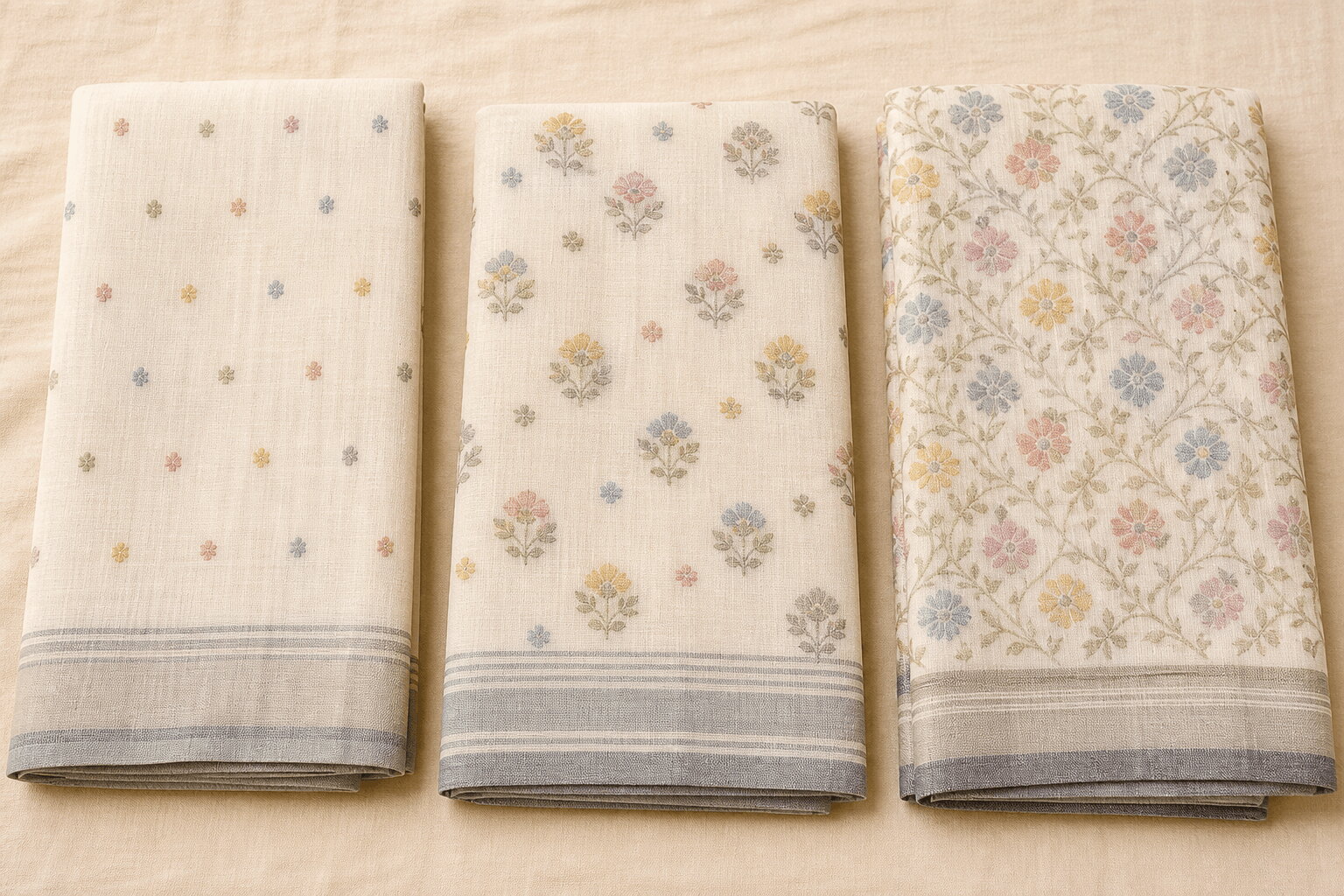
Jamdani pricing tracks thread count, motif density, and hours on the loom far more than it tracks brand name. As a working guide:
- Under ₹1,500: Not a handwoven Jamdani. This is printed cotton mimicking the look, or a power-loom copy with the pattern woven as a continuous jacquard rather than by hand.
- ₹3,000–₹8,000: Entry-level handloom Jamdani — simple duria or scattered butidar motifs, cotton base, a few weeks on the loom.
- ₹8,000–₹20,000: Mid-range handwoven pieces with denser motif work, often tehrbootidar layouts, sometimes a cotton-silk blend base.
- ₹20,000–₹80,000+: Fine Dhakai or panna hazar Jamdani — dense, all-over motif work that can take 25–30 days or longer, sometimes with silk or zari thread worked into the pattern. This is museum-quality weaving, and the price reflects the weaver’s hours, not markup.
If you want to understand why handloom pricing works this way at all, our Handloom vs Powerloom guide breaks down exactly what you’re paying the extra rupees for.
How to Identify an Authentic Handwoven Jamdani — 5 Checks
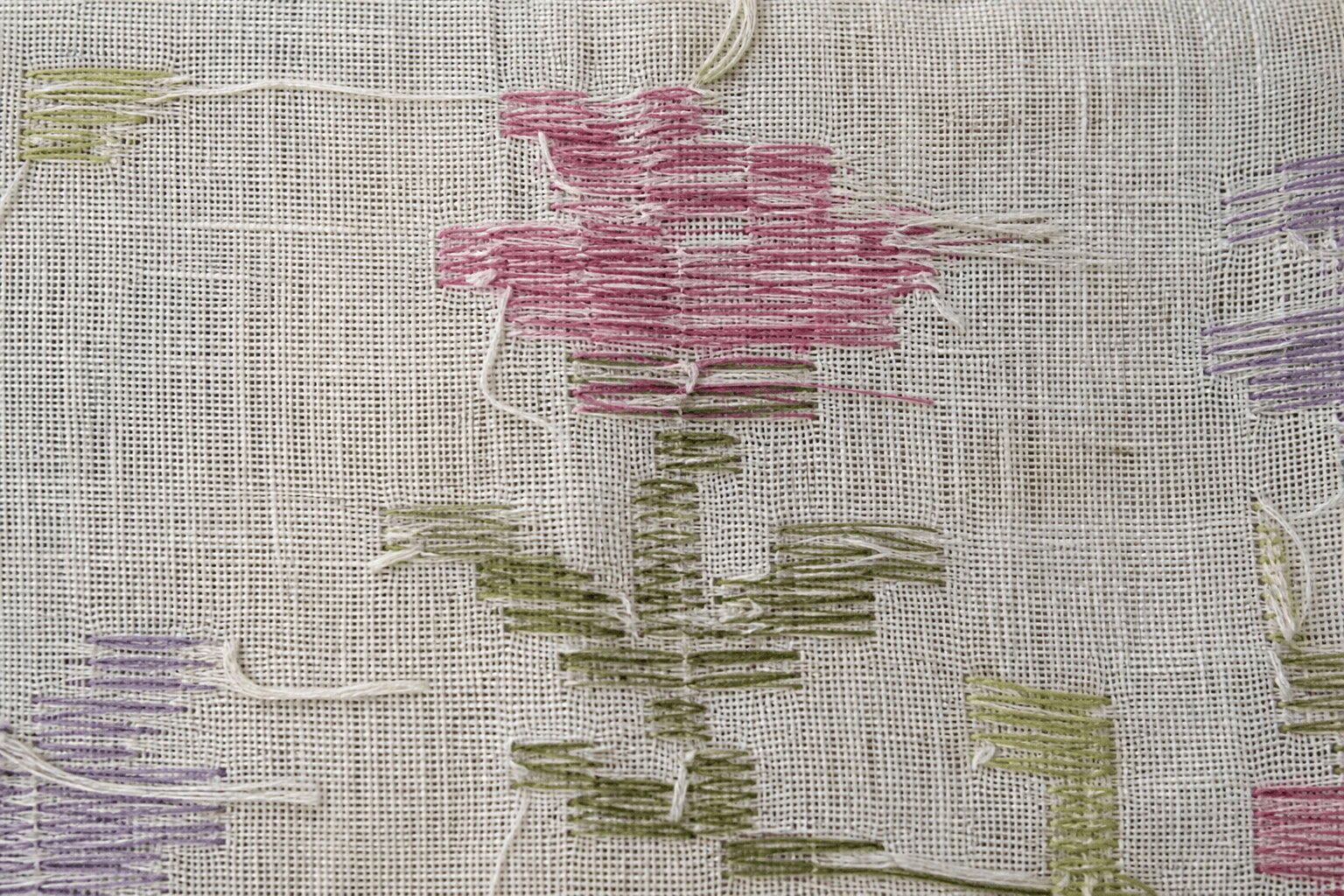
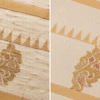
- Turn it over. Authentic Jamdani shows loose thread-ends and small floating loops on the reverse at every motif edge — the physical evidence of a discontinuous weft cut by hand. A power-loom or printed copy has a clean, uniform back.
- Check for micro-irregularity. Hand-placed motifs are never perfectly identical to each other — look closely at three repeats of the same buti. If they’re pixel-identical, it’s mechanised.
- Feel for raised texture. Run a finger over a motif; genuine Jamdani motifs sit very slightly proud of the base fabric because they’re a second layer of thread, not a dye.
- Hold it to light. A genuine fine Jamdani base is meaningfully translucent. If the ground fabric is opaque and stiff, it’s likely a heavier commercial cotton, not true muslin-weight Jamdani.
- Ask for the GI or handloom mark. A legitimate seller working with Fulia, Shantipur, or Dhaka weavers can tell you the weaving cluster by name. Vague answers about “Bengal handloom” with no district are a caution sign.
How to Wear and Care for a Jamdani Saree
Jamdani’s cotton or cotton-silk base drapes softly and suits both the classic Nivi drape and simpler office-friendly styles — see our step-by-step draping guide if you’re new to it. Because the fabric is fine and the motifs are hand-worked thread, avoid harsh detergent and machine washing; hand-wash in cold water with a mild soap, dry flat or on a padded hanger away from direct sun, and store folded in muslin cloth rather than plastic. Our full Saree Care Guide covers washing and long-term storage for handloom cotton and silk in more detail.
Where Jamdani Is Woven Today
On the Indian side, Nadia district in West Bengal — particularly Shantipur, Fulia, and Samudragarh — is home to thousands of Jamdani weaving families, many directly descended from Dhaka weavers who resettled after 1947. On the Bangladeshi side, Narayanganj district along the Shitalakshya River, close to Dhaka, remains the historic heart of the craft and the source of the finest Dhakai Jamdani. Both traditions continue to train new weavers, though UNESCO and Indian handloom census data both flag Jamdani as a craft with a shrinking, ageing workforce — one more reason a fair price for a genuine piece matters.
For the full index of Indian weaves we cover — Banarasi, Kanjivaram, Chanderi, Maheshwari, and more — start at the Weave Guide index. If you’re building your textile vocabulary, our Indian Textile Glossary defines terms like buti, zari, and supplementary weft in one place.
Frequently Asked Questions
Not quite. Jamdani is the weaving technique; Dhakai simply means it was woven in the Dhaka region of Bangladesh. A saree can be both — a “Dhakai Jamdani” — or a Jamdani woven elsewhere, such as Fulia in West Bengal.
Traditionally, yes — fine cotton is the classic Jamdani base. Cotton-silk and, less traditionally, silk-base Jamdani are now woven too, mainly for bridal and occasion wear, but the discontinuous weft technique and the translucent ground are what define the weave, not the fibre alone.
Ask the seller for a close-up photo of the reverse side. A genuine handwoven Jamdani shows visible thread-ends and slight irregularity at each motif; a power-loom or printed copy has a flat, uniform back with no loose threads at all.
Price scales with motif density and time on the loom, not brand. A simple duria-pattern Jamdani might take two to three weeks; a dense panna hazar piece with all-over motifs can take a weaver a month or more — that labour is the majority of the price difference.
A fine, dense-motif Jamdani — especially in a cotton-silk or silk base with a rich border — works beautifully for daytime wedding functions and receptions. For a heavier, more traditionally “bridal” occasion look, it’s often paired with or chosen alongside a Banarasi or Kanjivaram rather than replacing it.
Prefer to stay in the loop instead of digging through guides on your own? Join the Nakshapatta Edit — one email a month, one textile fact, one styling idea, one thing worth buying.