

Key Takeaways
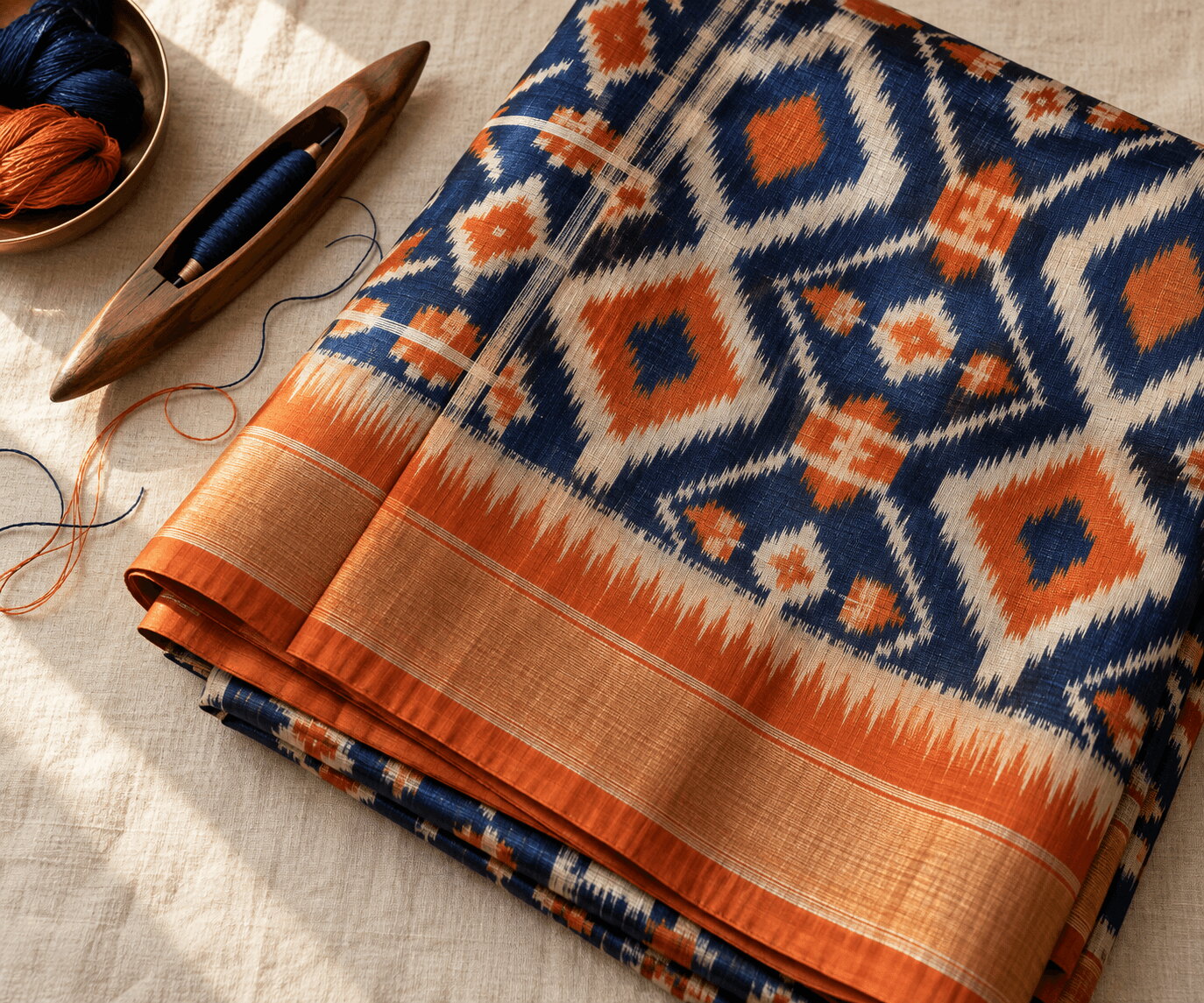
- Pochampally ikat is woven by resist-dyeing the yarn before weaving, so the geometric pattern appears almost identically on both sides of the cloth.
- It was among the first Indian crafts to receive a GI tag (2004) and is woven across Pochampally and neighbouring villages in Telangana.
- Genuine handloom prices run from about ₹1,500 for cotton single ikat to ₹18,000+ for silk double ikat — a cheap “double ikat” is almost always a print.
- Double ikat, where both warp and weft are patterned, is one of the world’s hardest weaves; nearby Puttapaka is one of only three places in India that still makes it.
- To spot a fake, check both sides, look for softly feathered colour edges, expect small hand-tied irregularities, and confirm the fibre with a silk test.
Most patterned fabric is decorated after it is made — printed, embroidered or brocaded onto finished cloth. Ikat works the other way around, and once you understand that single fact, you can tell a real Pochampally from a convincing print in seconds. The design is dyed into the yarn first, in precise measured sections, and only then is it woven. The pattern you see was decided before a single thread crossed the loom.
What is ikat — and why Pochampally does it differently
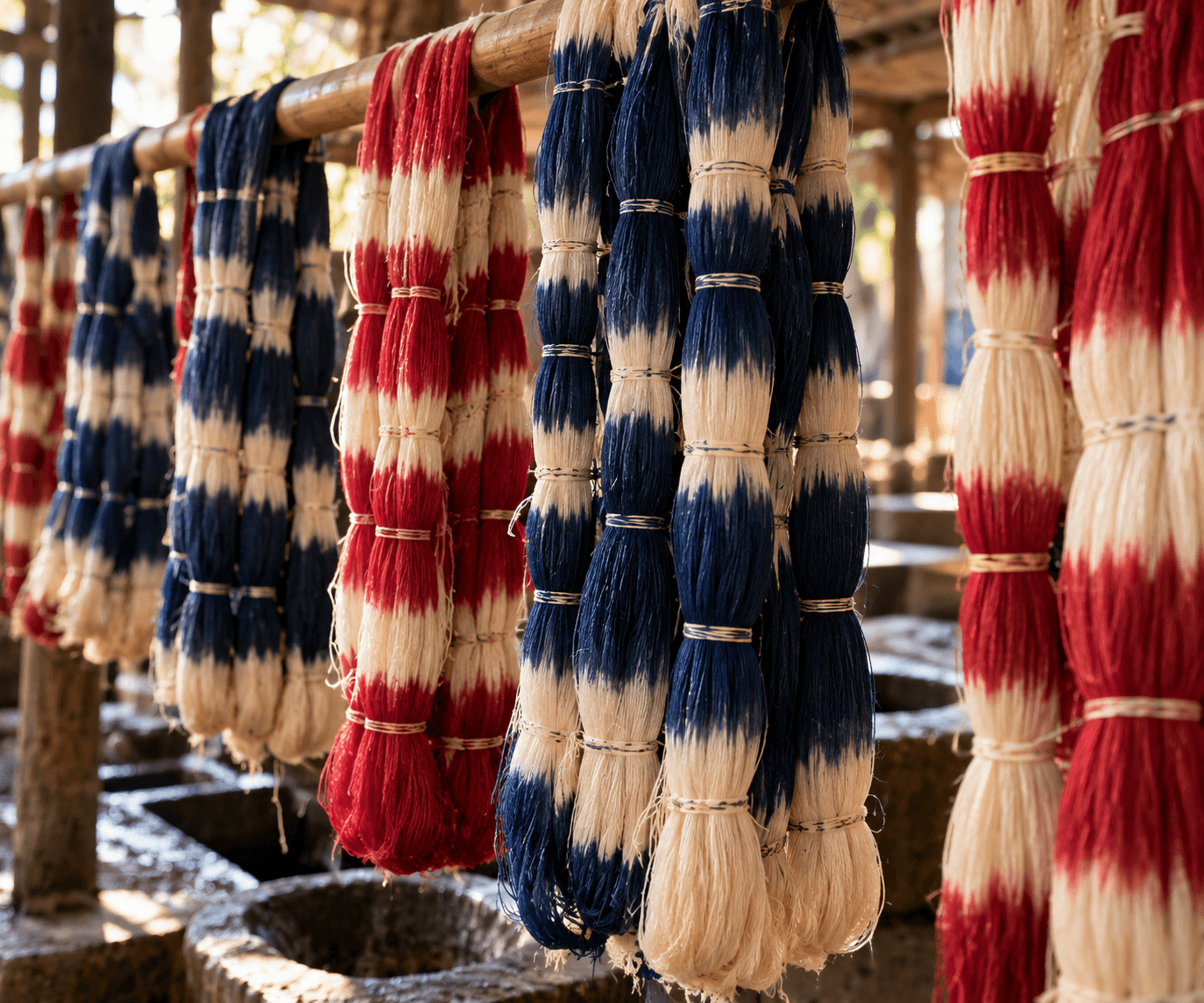
The word ikat comes from the Malay mengikat — to tie or bind. Bundles of yarn are tied tightly wherever colour must be kept out, dyed, then untied and woven, so the resist-dyed sections line up into a motif. The technique appears across Southeast Asia, Japan, Central America and Central Asia, but what sets Pochampally apart is the discipline of its geometry: sharp, repeating chowka (diamonds), grids and arrowheads held in exact registration across a full saree width. Ajrakh from Kutch is also a resist technique, but it resists with printed paste on finished cloth rather than tied yarn; see our Ajrakh print guide.
The signature you learn to love is the tiny, deliberate blur where two colours meet — the “ikat feathering” that no print can fake. If you are still building your vocabulary for this, our Indian Textile Glossary explains ikat, warp, weft and sixty other terms in plain language.
Single, double and combined ikat
There are three ways to do it, and the difference is exactly what you are paying for.
- Single ikat — only one set of threads (usually the weft) is resist-dyed; the other is plain-dyed. Faster, more forgiving, more affordable. Most cotton Pochampally sarees are single ikat.
- Double ikat — both warp and weft are separately tied and dyed, then aligned on the loom so the two patterned yarns meet precisely. One of the hardest weaves in the world; India has only three surviving double-ikat traditions — Patan Patola in Gujarat, Puttapaka near Pochampally, and pockets of Odisha.
- Combined ikat — patterned warp and patterned weft used in different zones, so border and body carry different effects.
The more the yarn does the work of the design, the more skill, time and money the saree represents.
Where Pochampally ikat comes from
Pochampally — officially Bhoodan Pochampally — sits in the Yadadri Bhuvanagiri district of Telangana, about 50 kilometres from Hyderabad, and is often called the “Silk City of India.” In 2021 it was named by UN Tourism as one of the world’s Best Tourism Villages. Its ikat is not a boutique revival; it is a living cluster of thousands of weaving households, and the weave carries a registered Geographical Indication (GI) tag granted in 2004.
The villages of the ikat cluster
“Pochampally ikat” is really the name for a family of villages that weave together — Pochampally itself, along with Puttapaka, Koyyalagudem, Choutuppal and Siripuram, among others. Each has its own leanings: some concentrate on affordable cotton yardage, others hold the high end. When a shopkeeper says “Pochampally,” a saree may have been dyed in one village and woven in another. That is the cluster working as it always has.
The Telia Rumal and Puttapaka’s double ikat
The deepest roots of this region’s ikat run through the Telia Rumal — an oil-treated, double-ikat cotton square, dyed in deep reds and blacks, historically traded from the Chirala–Puttapaka belt to markets across the Middle East and beyond. The “telia” (oily) preparation — weeks of treating yarn with oil and ash — gave the cloth its softness and its fastness. Puttapaka, a short drive from Pochampally, is still where India’s finest double-ikat silk saris are made by a small number of master families.
How a Pochampally ikat saree is made
A single silk ikat saree can take a family two to four weeks from start to finish, and the weaving is the last step, not the first.
- Design mapping — the motif is plotted onto graph paper and translated into exact measurements for tying.
- Yarn winding and tying — sections of yarn are bound tightly with rubber or thread wherever colour must be resisted. On a double ikat, both warp and weft are tied.
- Dyeing — the yarn is dip-dyed; bound areas stay clean. Repeated for each colour, re-tying between baths, so a multi-colour saree means multiple rounds.
- Untying and aligning — the resist is removed and the patterned yarn is loaded onto the loom, thread by thread, so the design registers across the full width.
- Weaving — on a traditional pit loom, the weaver watches the pattern reassemble as warp and weft cross.
Every step is done by hand, which is why the pattern is never machine-perfect — and why that slight imperfection is the mark of the real thing. It is the same handloom-versus-machine logic we lay out in our handloom vs powerloom guide.
Silk, cotton or sico — which Pochampally saree to buy
Pochampally is woven in three fibres, and the right one depends entirely on how you plan to wear it.
| Fibre | Best for | Character |
|---|---|---|
| Cotton ikat | Summer, office, travel, daywear | Light, breathable, crisp geometric patterns; the friendliest entry point |
| Silk ikat | Weddings and occasion wear | Sheen and drape; reads as understated luxury, not heavy bridal |
| Silk-cotton (“sico”) | A smart first “good” saree | Silk’s sheen with cotton’s ease, at a gentler price |
For occasion silk, a Pochampally sits naturally alongside the other great South Indian silks — see our Complete Kanjivaram Saree Guide for how the two compare in weight and formality.
Pochampally ikat saree price — what you should actually pay
Prices track fibre, ikat type and the fineness of the motif. As working ranges for genuine handloom pieces:
| Type | Indicative price (2026) |
|---|---|
| Cotton single ikat | ₹1,500 – ₹4,000 |
| Silk-cotton (sico) ikat | ₹3,500 – ₹8,000 |
| Silk single ikat | ₹5,000 – ₹15,000 |
| Silk double ikat / Puttapaka | ₹18,000 – ₹45,000+ (master pieces higher) |
When in doubt about the fibre, run the checks in our guide to identifying a pure silk saree before you pay.
How to identify a genuine Pochampally ikat
Six things separate the real weave from a screen-printed lookalike.
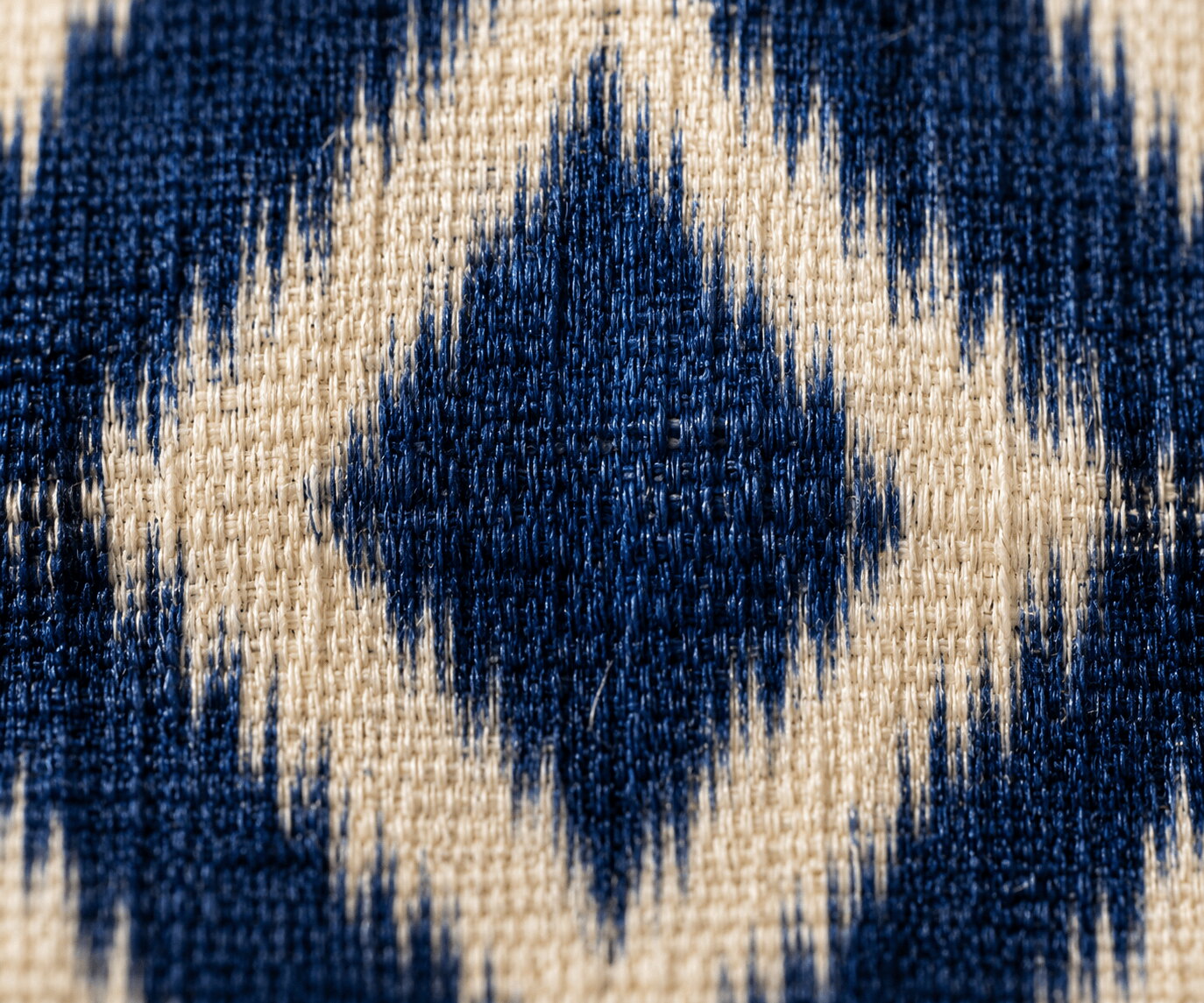
- Check both sides. In true ikat the pattern is dyed into the yarn, so it appears on the reverse almost as clearly as the front. A print has a clear right and wrong side.
- Look for the feathered edge. Genuine ikat motifs have a soft, hazy boundary where colours meet. Printed patterns have hard, clean edges.
- Expect gentle irregularity. Small shifts in alignment are proof of hand-tying, not a flaw. Machine-perfect repetition is a red flag.
- Feel the fibre. For silk, confirm with a burn test or the tests in our pure-silk guide. Ikat cotton should feel like woven cloth, not coated fabric.
- Ask single or double. A seller who can explain which yarns are patterned, and price accordingly, is usually genuine.
- Look for the GI and Handloom marks. Pochampally ikat carries a GI (2004), and authentic handloom pieces may carry the India Handloom / Handloom Mark tag.
How to wear and care for your Pochampally saree
Cotton and sico Pochampally sarees are wonderfully wearable — the geometry looks modern and photographs sharply, which is why they have quietly become a favourite for work and daywear. Style a cotton ikat with a solid contrast blouse in one of the saree’s own colours, and let the pattern do the talking.
For care, treat ikat by its fibre. Silk ikat should be dry-cleaned, especially for the first few washes, to protect the dyes from bleeding. Cotton ikat can be gently hand-washed alone in cold water with a mild detergent, but expect the deep natural dyes to release a little colour early on. Store folded in cotton or muslin, away from direct light, and refold along new lines every few months. Our full Saree Care Guide covers washing, storing and preserving in detail.
Frequently asked questions
A Pochampally ikat saree is a handwoven saree from the Pochampally cluster in Telangana, made by resist-dyeing the yarn before weaving so the pattern — usually geometric diamonds and grids — is formed by the threads themselves. It was among the first Indian textiles to receive a GI tag, in 2004.
In single ikat, only one set of threads (usually the weft) is patterned; in double ikat, both warp and weft are separately tied, dyed and then aligned on the loom to form the motif. Double ikat is far more difficult and expensive, and Puttapaka near Pochampally is one of only three places in India that still makes it.
Cotton single ikat runs roughly ₹1,500–₹4,000, silk-cotton ₹3,500–₹8,000, silk single ikat ₹5,000–₹15,000, and silk double ikat from around ₹18,000 upward. A “pure silk double ikat” priced under a few thousand rupees is almost always a print.
Check that the pattern appears clearly on both sides, look for softly feathered colour edges (prints have hard edges), and expect small irregularities in alignment that show hand-tying. Genuine pieces may also carry the GI or Handloom Mark tag.
No. Pochampally is woven in cotton, silk and silk-cotton (“sico”) blends. Cotton ikat is ideal for everyday and office wear; silk ikat is for occasions; sico offers silk’s sheen at a gentler price.
Know the weave before you buy it. Join The Nakshapatta Edit for one textile fact, one styling tip and one honest recommendation each week — sign up here.
Editorial independence: Nakshapatta does not accept payment for recommendations. Prices are indicative 2026 loom-side ranges and vary by weaver, ikat type and fibre.