

What you will know after reading this
- The single fastest test — pull one thread and burn it. What real silk does that nothing else can fake.
- Four more checks: the touch test, the rub/friction test, the price floor, and what the Silk Mark actually certifies.
- Why “pure silk” on a label means almost nothing on its own, and the specific wording that should make you pause.
- How this differs from the handloom-vs-powerloom question — and why you sometimes need both tests.
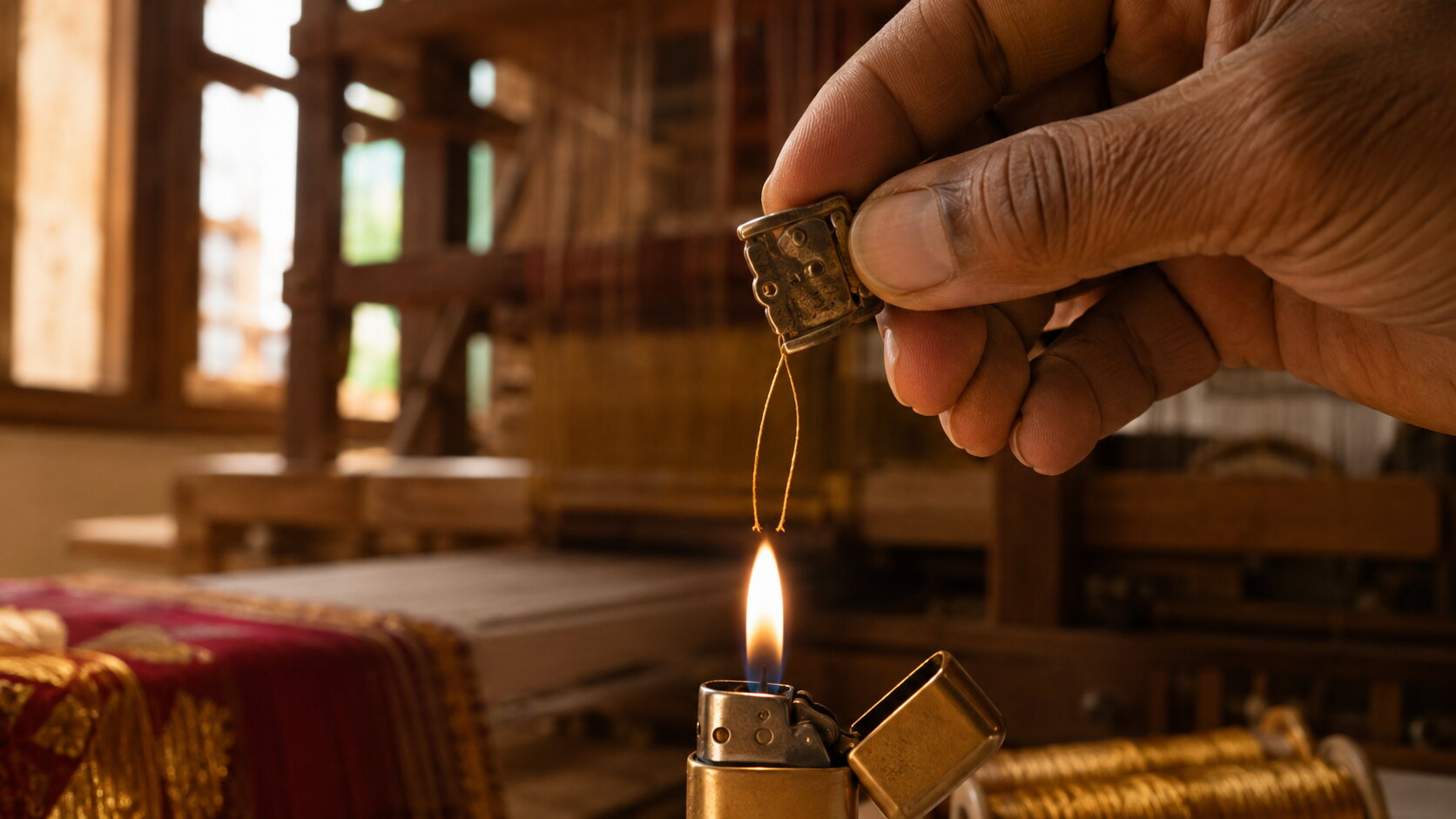
A pure silk saree is woven from natural silk fibre — filament produced by the silkworm, spun and woven with no synthetic blend. The fastest reliable test: pull two or three threads from an inner seam and burn them. Pure silk burns slowly, smells like burning hair, and leaves a fine, crushable grey ash. Art silk (viscose, rayon, or polyester dressed up with a silk-like sheen) burns fast, smells of burning plastic or paper, and leaves a hard black bead.
In Varanasi, this is the first thing a weaver’s family teaches you, long before they teach you to spot a good motif. Because a Banarasi with a stunning jangla pattern, woven on a real pit loom, in a fabric that isn’t actually silk — is still not what it claims to be. Loom and fibre are two separate questions, and most buyers only ever ask one of them.
Pure silk vs. handloom — these are two different questions
This trips up more buyers than anything else on this site. Handloom vs powerloom tells you how a saree was woven — by hand or by machine. This guide tells you what it’s woven from. A saree can be:
- Handwoven and pure silk — genuine, and priced accordingly
- Handwoven and art silk — a real handloom saree, made from a synthetic fibre (this exists, and isn’t automatically fraud if disclosed)
- Powerloom and pure silk — machine-woven, but genuinely silk fibre
- Powerloom and art silk — the cheapest and most commonly mislabelled combination
You need both tests. This guide covers only fibre. For loom authenticity, the reverse-side check in the handloom vs powerloom guide is the one to run alongside this.
Test 1 — The burn test (most reliable, requires a flame)
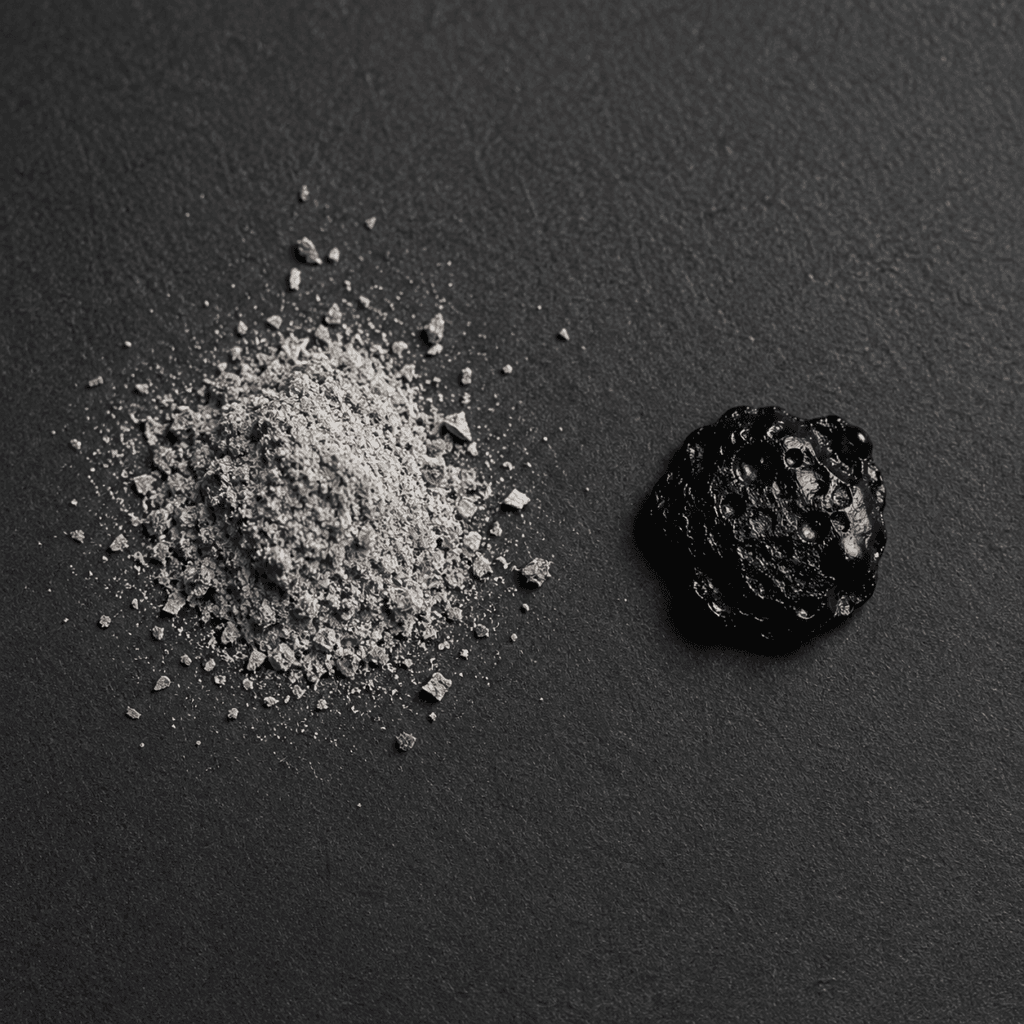
This is the test Varanasi weaving families actually use, and it cannot be faked by a good salesperson.
How to do it: Pull two or three loose threads from an inner seam or hem — never from a visible part of the saree. Hold them with tweezers or a clip away from the fabric, and touch a lighter flame to the tip for two to three seconds, then let it self-extinguish or blow it out.
✓ Pure silk: Burns slowly and self-extinguishes when the flame is removed. Smells distinctly like burning hair or feathers — a protein smell, because silk is a protein fibre (fibroin). Leaves a small amount of dark, crushable ash that turns to fine powder when rubbed between fingers. No bead, no melting.
✗ Art silk (viscose/rayon): Burns fast and continues burning after the flame is removed, similar to burning paper. Little to no distinct smell, or a faintly “burnt cotton” smell. Leaves a light grey, feathery ash — but the burning speed and lack of protein smell give it away.
✗ Art silk (polyester-based): Melts before it burns, shrinks away from the flame, and produces a hard black bead or blob when cooled. Smells chemical, like burning plastic. This is the easiest of the three to catch — the melting bead is unmistakable.
If a seller refuses to let you pull even one or two threads from an inner seam for testing, treat that refusal itself as information. If you would rather start with sellers who welcome this kind of testing, see where to buy genuine handloom sarees online.
Test 2 — The touch and friction test (no flame needed)
Hold a length of the fabric loosely in your open palm. Pure silk feels cool against the skin in the first few seconds of contact — the fibre has a low thermal conductivity people mistake for “coolness” but is really the fabric drawing heat from your hand. Art silk feels warmer, almost immediately.
Now the friction test: gather a length of fabric and run it firmly through your closed fist. Pure silk produces a distinctive scroop — a faint rustling, almost squeaking friction sound and resistance, caused by the natural irregularity of the silk filament surface. Art silk slides through smoothly and silently, with none of that resistance.
The touch test also appears in our Handloom vs Powerloom guide for a different purpose — there, you’re feeling for weave structure. Here, you’re feeling for fibre. Run both if you’re testing a saree that claims to be handwoven pure silk, since sellers sometimes get the fibre claim wrong even when the loom claim is honest.
Test 3 — The rub / rub-mark test for zari-heavy sarees
This test is specific to sarees with heavy zari, where the burn test on the ground fabric alone won’t tell you about the metallic thread. Rub the zari border firmly against the inside of your wrist for ten seconds.
✓ Genuine zari (silver wire, gold-coated per traditional method, or certified “tested zari”) leaves no mark, or at most a barely visible sheen.
✗ Metallic-coated plastic thread leaves a faint grey, green, or coppery residue — the coating rubbing off onto skin.
This doesn’t test the ground silk, only the metallic thread — but on a heavily worked Banarasi or Kanjivaram, the zari can be 30–40% of what you’re paying for, so it deserves its own check.
Test 4 — Read the price as a floor, not a guarantee
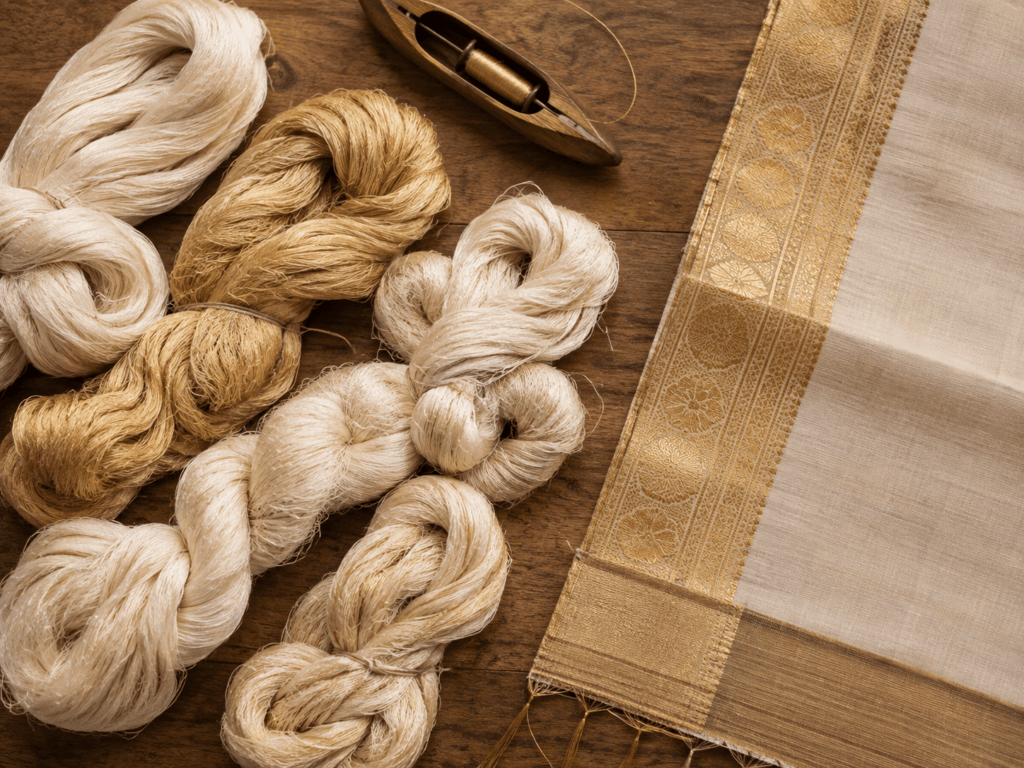
Pure silk has a raw material cost that sets a hard floor. As of 2025, raw mulberry silk yarn trades at roughly ₹800–₹1,500 per metre before any weaving labour is added. A full saree needs 5.5–6.5 metres. Do that arithmetic before you look at the price tag.
| Silk saree type | Genuine pure silk starts at | Under this price, expect |
|---|---|---|
| Simple pure silk (plain, minimal work) | ₹4,500–₹7,000 | Art silk or silk-blend |
| Banarasi katan, moderate zari | ₹8,000–₹14,000 | Art silk ground, real-looking zari print |
| Kanjivaram pure silk | ₹8,000–₹15,000 | Not genuine Kanjivaram silk |
| Tussar or matka silk (textured) | ₹3,000–₹6,000 | Polyester “tussar-look” fabric |
Price alone never proves authenticity — a dishonest seller can charge a fair price for a fake. But a price that’s mathematically impossible for the raw material proves the opposite: it cannot be what it claims. The full Banarasi price guide by weave type breaks this down further if you’re specifically shopping Banarasi.
Test 5 — The Silk Mark
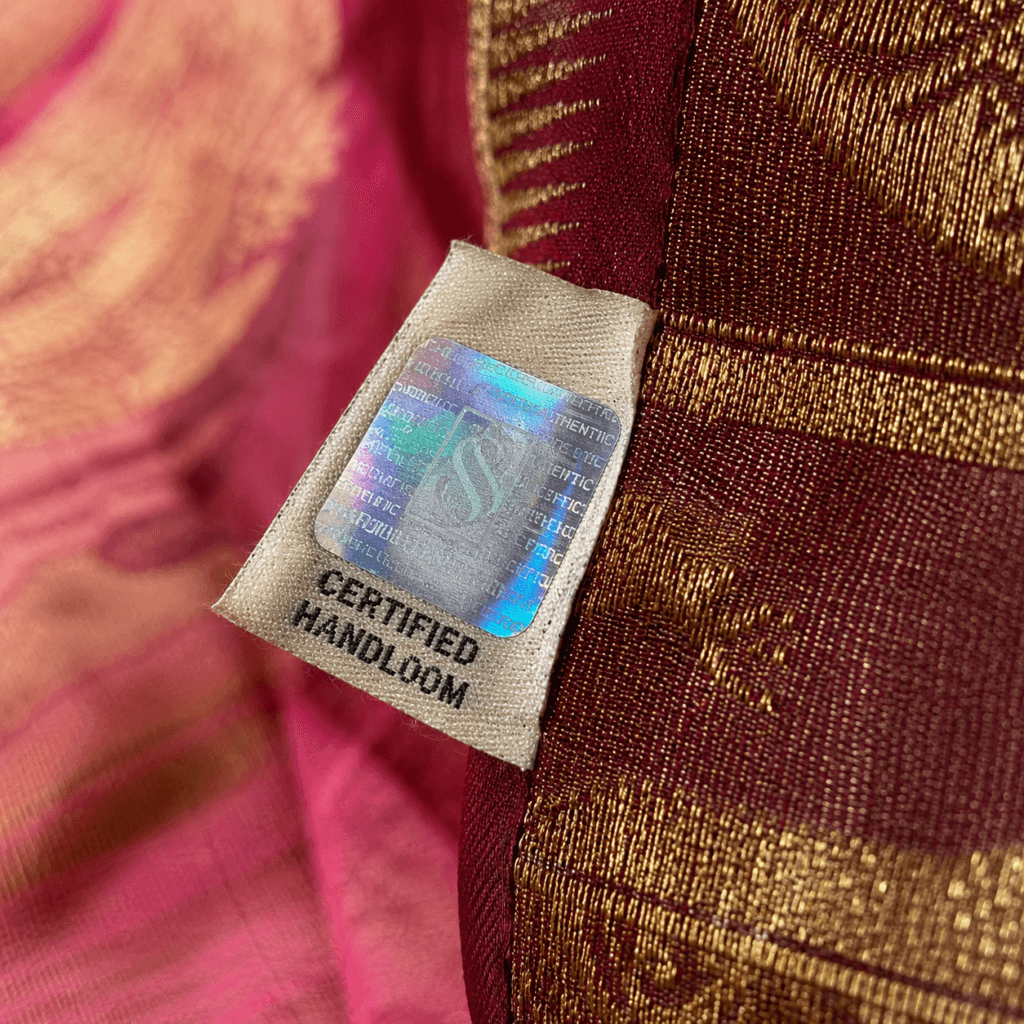
The Silk Mark, issued by the Central Silk Board (Ministry of Textiles), is India’s official certification that a fabric is 100% natural silk. It appears as a small woven or adhesive label, usually with a hologram, attached at the saree’s inner border or with the tag. A label can be present and still be fake, so verify the Silk Mark number online before you rely on it.
What it confirms: the fibre is genuine natural silk.
What it does not confirm: whether the saree is handloom or powerloom — that’s a separate question, covered in the handloom vs powerloom guide.
Its absence doesn’t automatically mean art silk — many weavers selling directly, especially smaller Varanasi karigars, never register for the mark. But its presence, combined with tests 1–4, is the strongest confirmation available without lab testing.
What “pure silk” on the label actually means — and doesn’t
Indian textile labelling has no strict legal enforcement at the point of online sale, which is exactly why these tests matter. Watch for specific wording:
- “Pure silk” — should mean 100% silk fibre. Verify with the burn test regardless.
- “Silk blend” or “art silk” — honest disclosure that it isn’t pure silk. Not a scam if priced accordingly.
- “Silk-look” or “silk finish” — a polite way of saying it is not silk at all.
- “Banarasi silk” with no fibre content stated — the most common ambiguous listing. Ask directly, or check the reverse for a Silk Mark tag.
Quick Care Note — Before You Test at Home
You’ve just confirmed the saree is pure silk. One more thing worth knowing before you take it home: pure silk should almost always be dry-cleaned, not hand-washed. Water can dull metallic zari, bleed hand-dyed colour, and weaken the fibre over time — damage that’s often irreversible. We cover full silk care in detail separately, but the short version is: when in doubt, take it to a trusted dry cleaner, not your washing machine.
FAQ
Use the touch and friction test as your first check — pure silk feels cool against skin and produces a faint scroop sound when rubbed between your palms, while art silk feels warmer and slides silently. It’s less conclusive than the burn test but works when you can’t pull a thread, such as on a saree you already own.
No. Art silk is a legitimate, honestly priced fabric category when disclosed as such — many beautiful, well-made sarees use viscose or polyester deliberately for drape, cost, or care ease. The issue is only when art silk is sold as pure silk at pure-silk prices.
Not if done correctly. You’re pulling two or three loose threads from an inner seam allowance, not from the visible fabric — a spot invisible when worn. This is standard practice among weavers and serious buyers in Varanasi.
Our general recommendation: dry-clean pure silk sarees, always — especially anything with zari, hand-dyed colour, or embroidery. Water can dull metallic thread, cause colour bleeding, and weaken silk fibre over repeated washing, so the risk isn’t worth it on a saree you’ve paid silk prices for. A trusted local dry cleaner who works with sarees regularly is the safer choice every time. Fabric care can vary by weave, dye process, and construction — always check with the weaver, seller, or a professional cleaner for saree-specific instructions before washing at home.
Yes — this is more common than most buyers expect. A weaver can hand-weave a saree using art silk yarn instead of natural silk, producing an authentically handwoven piece that simply isn’t silk. It should be priced and labelled as handloom art silk, not “pure silk handloom.” Run both the reverse-side test (for loom) and the burn test (for fibre) if the listing claims both.
Know the difference between silk and story. Get the free Saree Care & Authenticity Checklist — five tests, one page, save it to your phone before your next saree shop. Join the Edit →