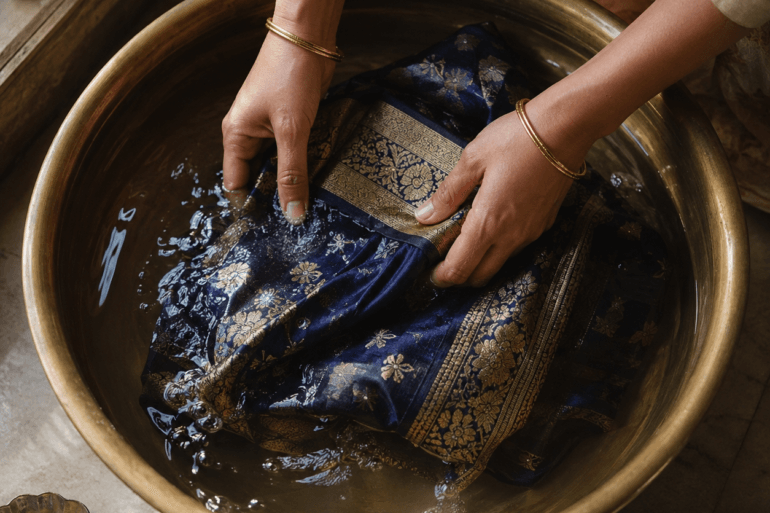
How to wash a silk saree at home, store it for decades, and care for zari and natural-dye weaves — a complete guide written from Varanasi, with a free printable checklist.
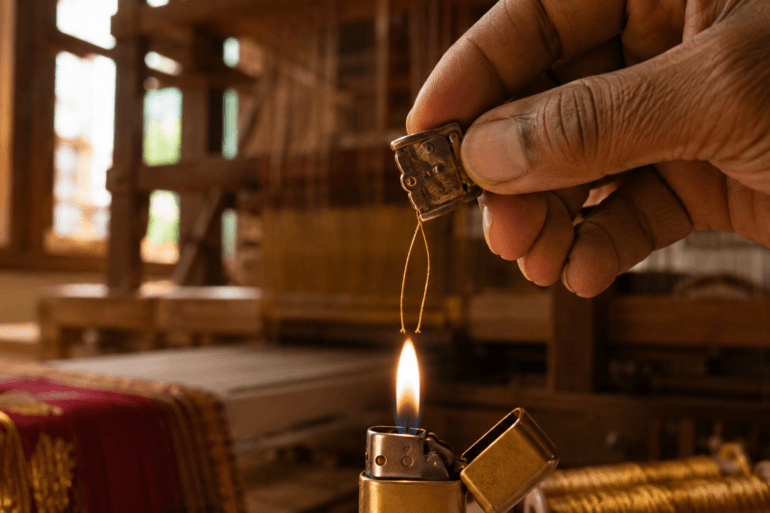
Close-up of a weaver's or buyer's hand holding two or three loose silk threads with a small lighter flame beneath them mid-burn-test, in a Varanasi weaving workshop setting, soft natural window light, shallow depth of field with the flame and thread in sharp focus.
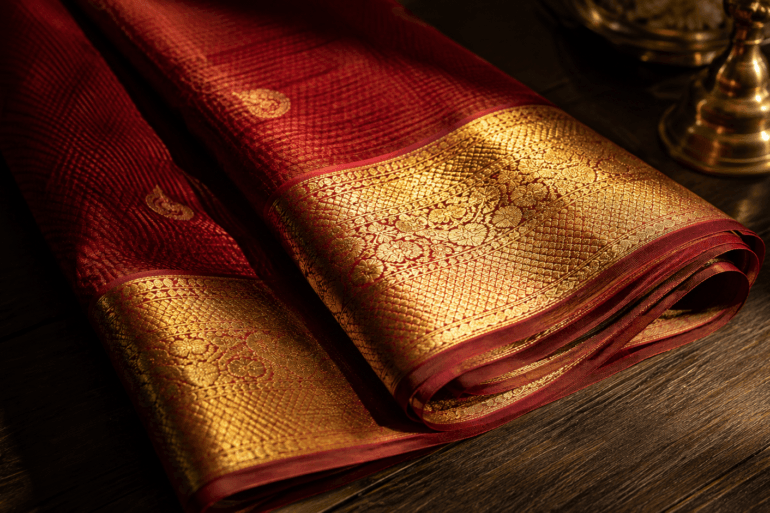
Woven in a temple town outside Chennai since the 15th century — the korvai technique, the motifs, and how to identify genuine Kanjivaram silk before you buy.
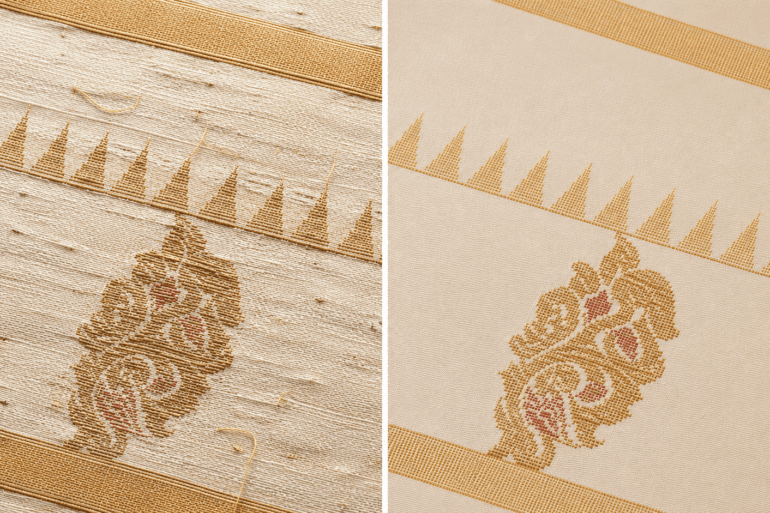
The reversible border, folded back to show both sides. The identical stripe-and-motif structure on the reverse is the clearest way to confirm a genuine Maheshwari weave. Image: Nakshapatta, Maheshwar weave study 2025.
Struggling to style a saree for work? Discover 5 complete office-ready handloom saree looks — with blouse ideas, drape styles, accessories, and fabric guides — curated for the modern Indian professional.
The question every handloom buyer has. The answer most sellers would rather you didn't know. Five tests you can do in any shop, at any fair, or from a photograph — no equipment, no expertise required.
Everything about Banarasi sarees — katan silk, organza, georgette, zari types, price guide from ₹6,000 to ₹1,50,000, and five tests to identify authentic handloom. Written from Varanasi.